
HermèsLe voyage d'Hermès
2020
iOS & Android App
This project focused on different tasks such as to propose a solution to Hermès and to collect customer feedback in a discreet way.
Sector
Luxury
Type
Mobile
Target
B2C
Date
2021
Problem
This project focused on different tasks such as to propose a solution to Hermès and to collect customer feedback in a discreet way.
Challenge
The real difficulty was that the concept had to be “Hermès compatible”, since Hermès is a company with a certain reputation, and even refuses to be too direct or to communicate on some media outlets.
Solution
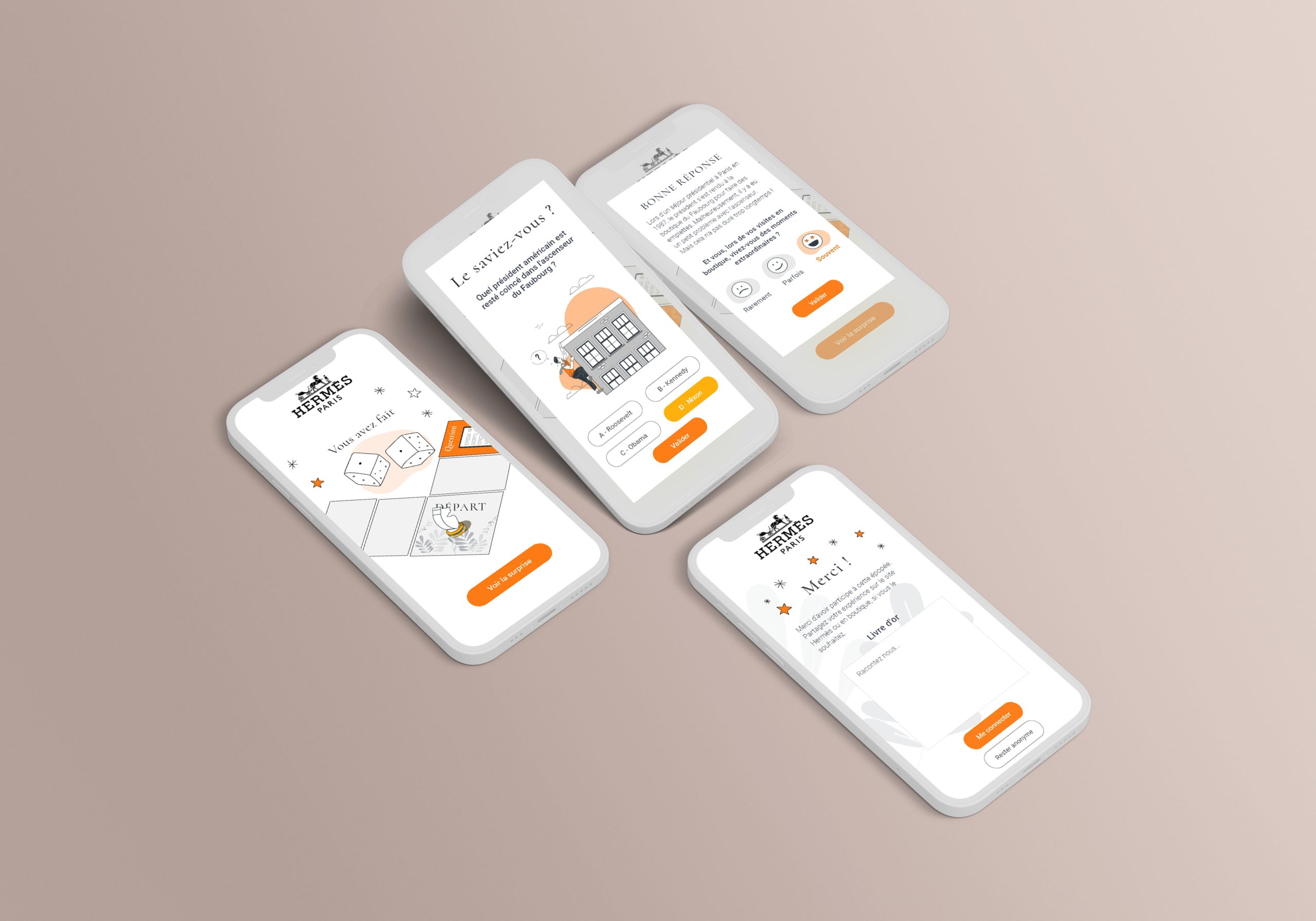
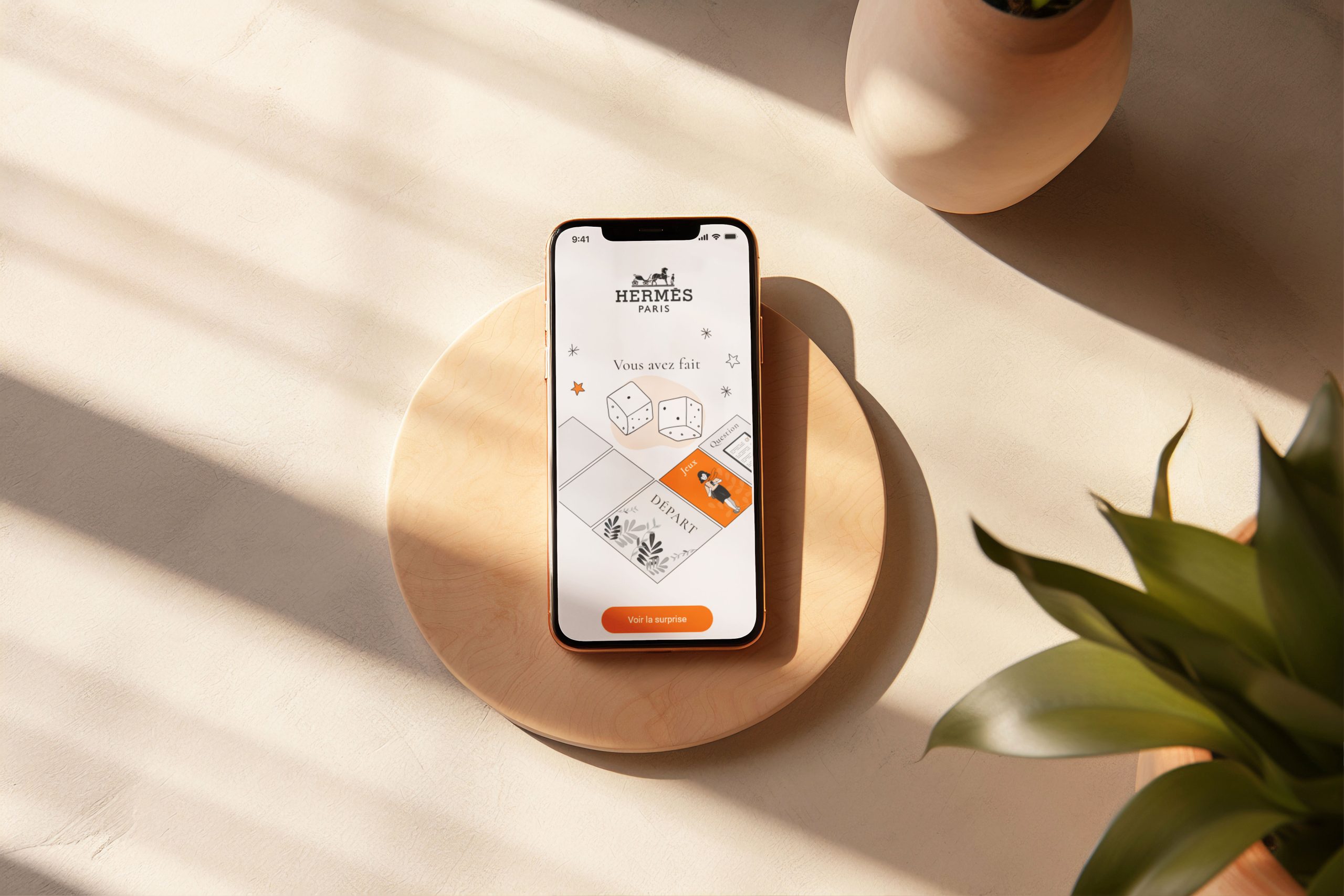
Le Voyage Hermès is a seasonal game that aims to collect qualitative feedback, while entertaining and transmitting the culture of Hermès Paris. Through a goose Game, the user moves his pawn forward, discovering a series of fun and quick mini-games.
Case study
Janvier 2021
Hermès — Luxury
Brief and challenge
This project focused on different tasks such as to propose a solution to Hermès and to collect customer feedback in a discreet way. The real difficulty was that the concept had to be “Hermès compatible”, since Hermès is a company with a certain reputation, and even refuses to be too direct or to communicate on some media outlets.
There was a real challenge for the brand, especially with the global pandemic due to COVID. This made it impossible to access physical stores, which was an inconvenience since it is the heart of the customer experience and significantly increasing orders on the site.
So there was a double challenge: to be able to get the customers’ feedback after their experience in-store and to offer a solution applicable to the web.
On the other hand, Hermès has a very efficient mystery visit network, but it is not regular enough to have a daily feedback.
Interviewing and understanding
The interview phase was valuable, as it often is.
“Impossible to get in touch with the brand.”
“The crowd in an Hermès store is a real obstacle to getting in!”
“I exchange text messages with my favourite saleswoman. She notifies me of new products. It’s very practical.”
We were able to better understand the vision of certain customers and, above all, the dissonance that can sometimes exist between Hermès and its customers.
It was also important to see how other luxury brands handled this feedback. Thanks to interviews with salespeople from other shops, we could see that Chanel salespeople had discussions with their customers via WhatsApp, allowing them to have some feedback. Louis Vuitton’s salespeople confirmed being used to the same practice, in addition to a dedicated app.
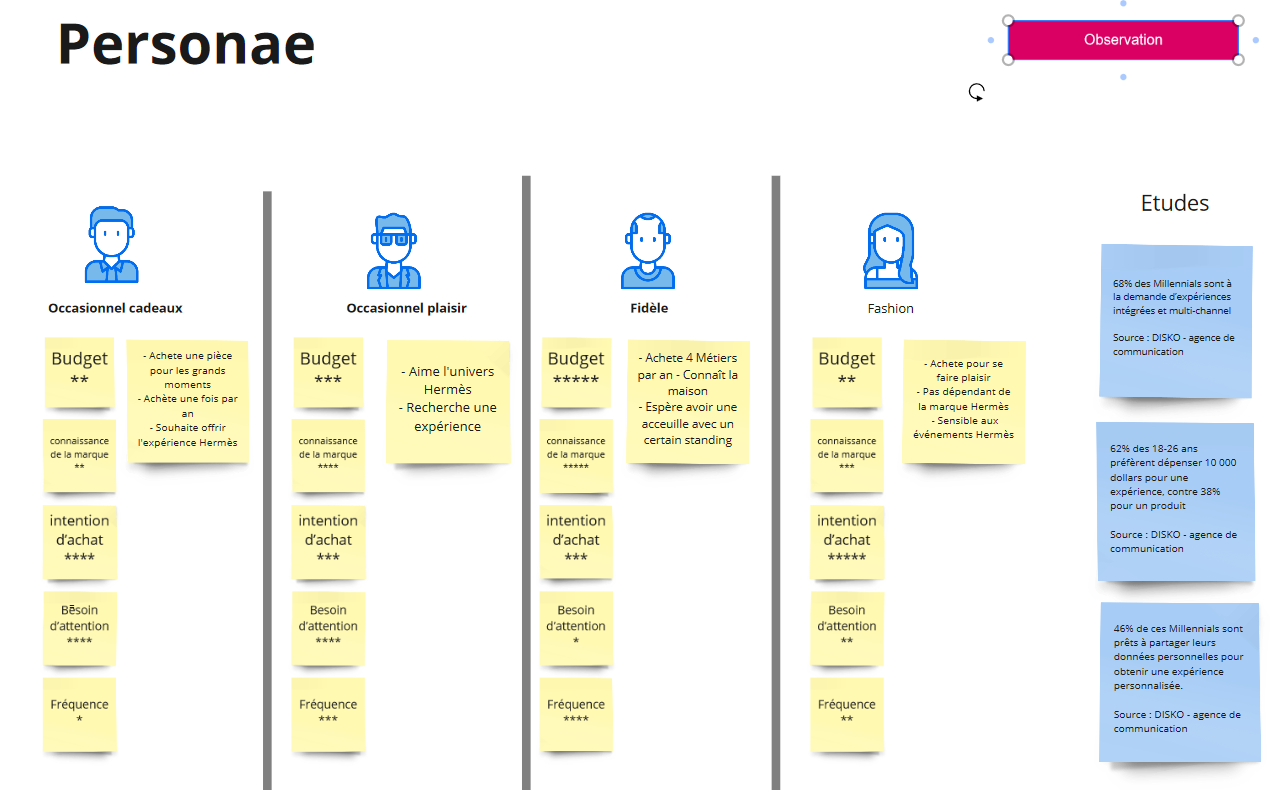
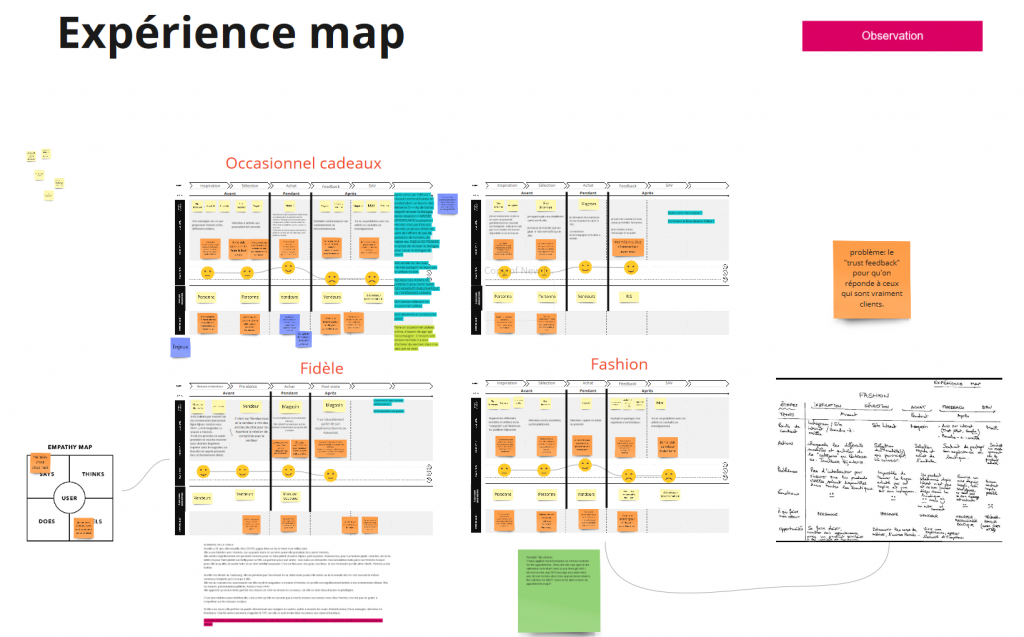
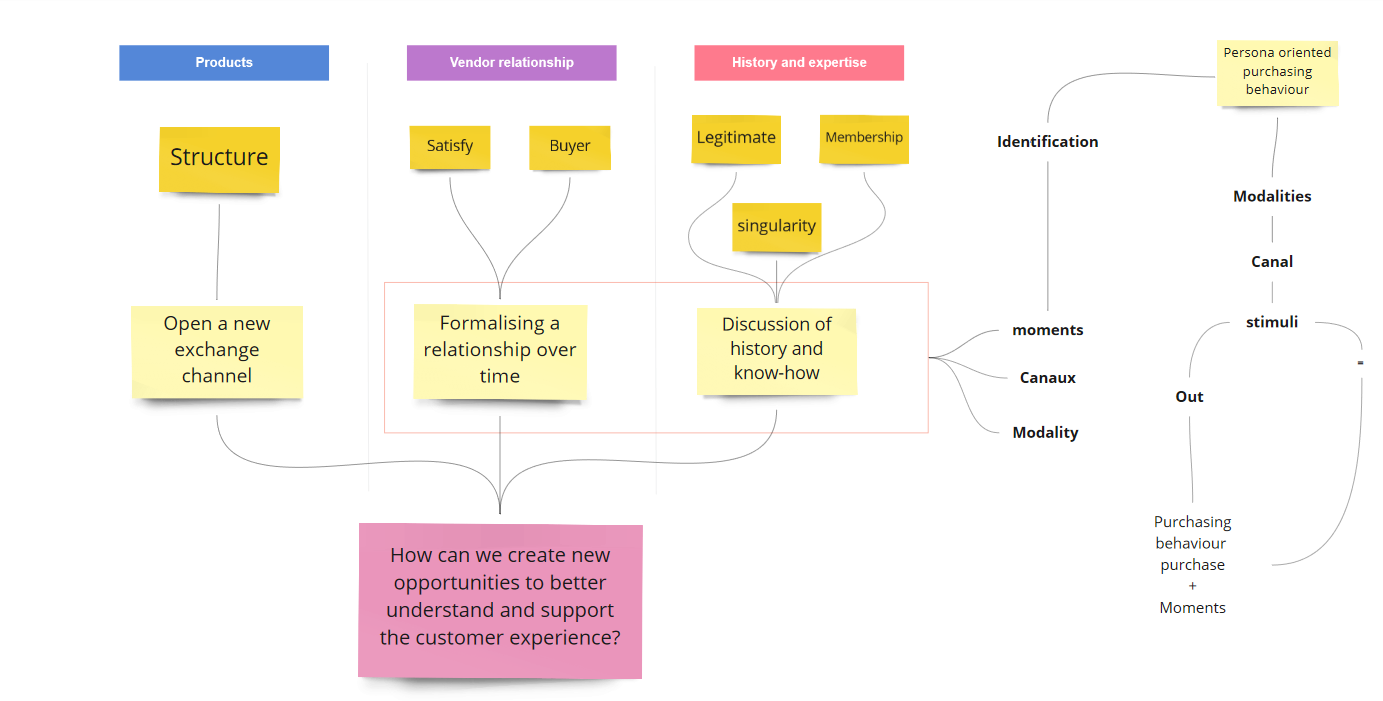
In addition to the interviews, the creation of personas, which have evolved into an archetype and an experience map, has allowed us to better understand the frustrations and the contact points.
Conceptualisation phase
We were keen to include in our problem the notions that characterise the experience of a customer in a shop. Firstly, there is the product: how could we strengthen the link with our customers through the product? The second element is the salesperson/customer relationship. This relationship is at the heart of the sales experience, and we wanted to integrate it into our problem.
Our different ideas:
Before presenting the chosen solution, we explored other avenues. Here are the main ones and the avenues that led us to the Hermès Epic.
- The vendor return: This is the second idea we presented to you during our interim meeting. This project was born out of the observation that we had after talking to salespeople and customers: salespeople are the most likely to feel how the customer’s experience went, since they are involved in the relationship.
We realised that salespeople’s time was very valuable, as they are constantly in demand in the shop, and we wanted to focus on the most relevant questions to ask them to find out quickly how the sales experience went. - Customer ambassadors: We learned from our interviews that some customers are willing to talk directly to the House about their experiences. We have composed different scenarios to identify this type of customer.
The most convincing one is the following: The salesperson recognises a “loyal” customer and tells him/her about our interest in his/her return. If he refuses, we do not insist; if he is interested, we continue the conversation and if he is not so interested, we reassure him and explain the nature of our approach. - Continuous dialogue: We have learned that sales are conducted in a completely different way in China. Salespeople are closer to their customers and do not hesitate to communicate with them by message or otherwise. We imagined how we could adapt this type of dialogue to French shops.
Encouraging this type of dialogue will allow us to learn more about the salesperson/customer relationship and also to get feedback from users who are confident.
Solution
During the ideation phase, an observation came to change our approach. We realised that our four typical customer profiles (the loyal, the fashion, the occasional gift, the occasional pleasure) could adopt the same behaviour, without having exactly the same approach. For example, a “Loyal” customer can come and walk around the shop just like the Fashion. So we can activate hooks at certain times to take them with us and get those customer returns in a subtle way.
From this first observation, we imagined: the Hermès epic.
Sesame
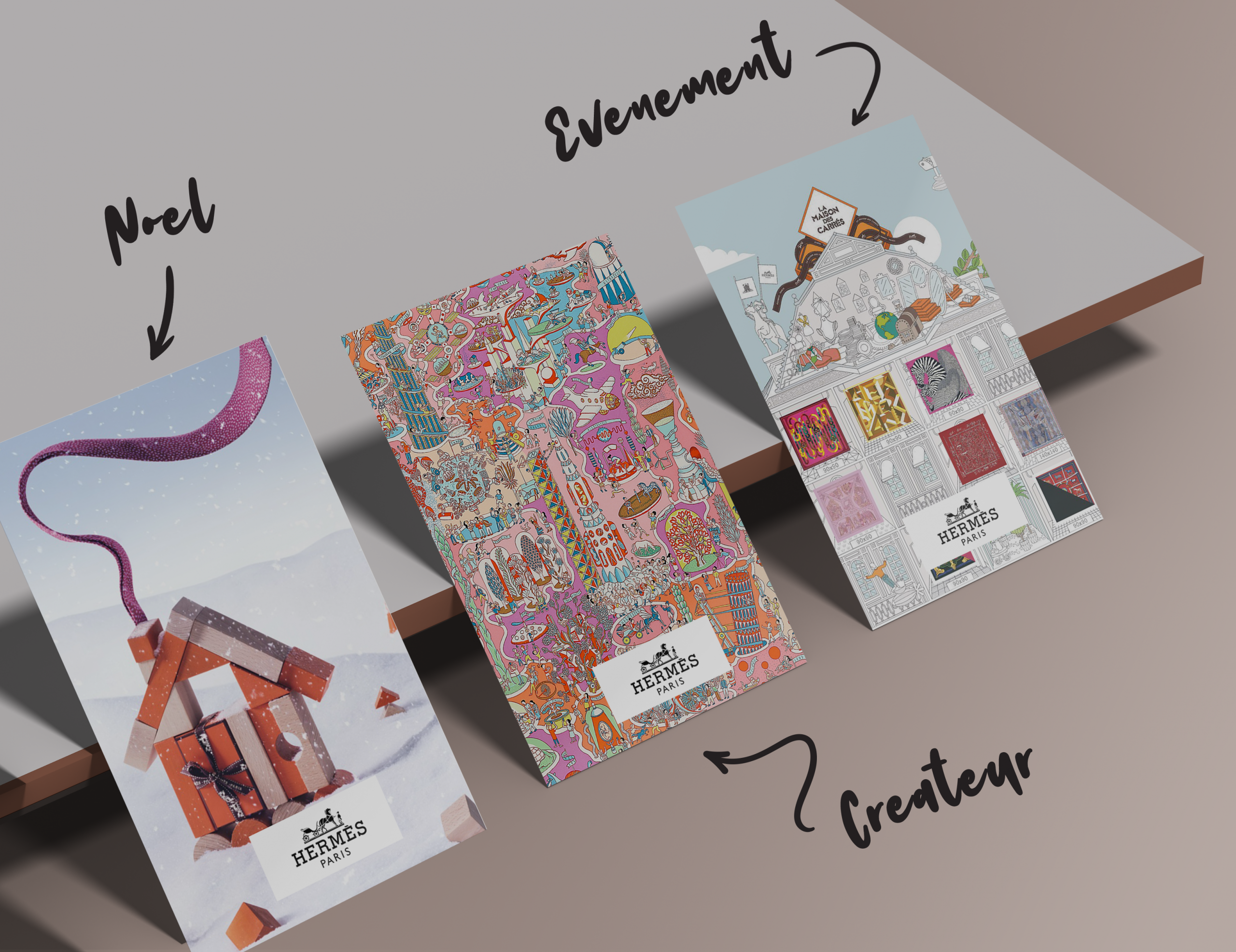
This is a postcard, using or reusing Hermès visuals (archives, creation, collection, etc…). On the back, a QR code and a web address invite us to find out more.
This pass is distributed by the salesperson after a purchase, but not just any old way. A ceremony takes place during the distribution, with a small sentence ”if you want to help us improve your next experience and discover new content, we are waiting for you”. The point of the ceremony is to give the card more importance.
It’s not just a card, it’s a pass to discover a little more about Hermès and lift the veil on some of the brand’s mysteries. But it’s also a way for the customer to be heard.
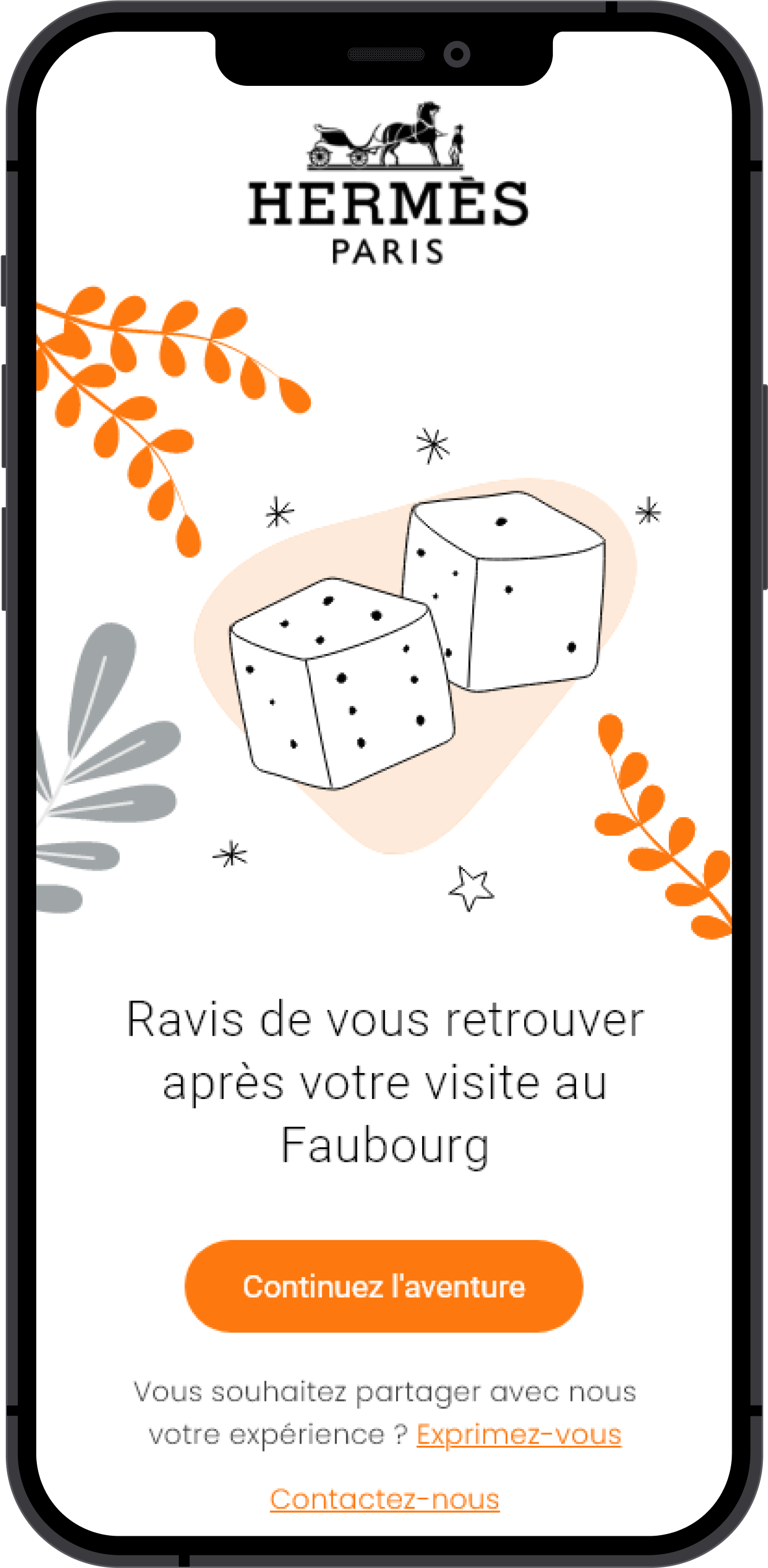
The card redirects us to a web page (otherwise inaccessible), and that’s where the Hermès Epic begins.
Other remarks:
- The card can be adapted to a whole range of situations. The visual is bound to evolve according to the collections, designers, events or others… Each edition is therefore ephemeral.
- If the person orders online, he or she will receive this sesame in digital form.
Application
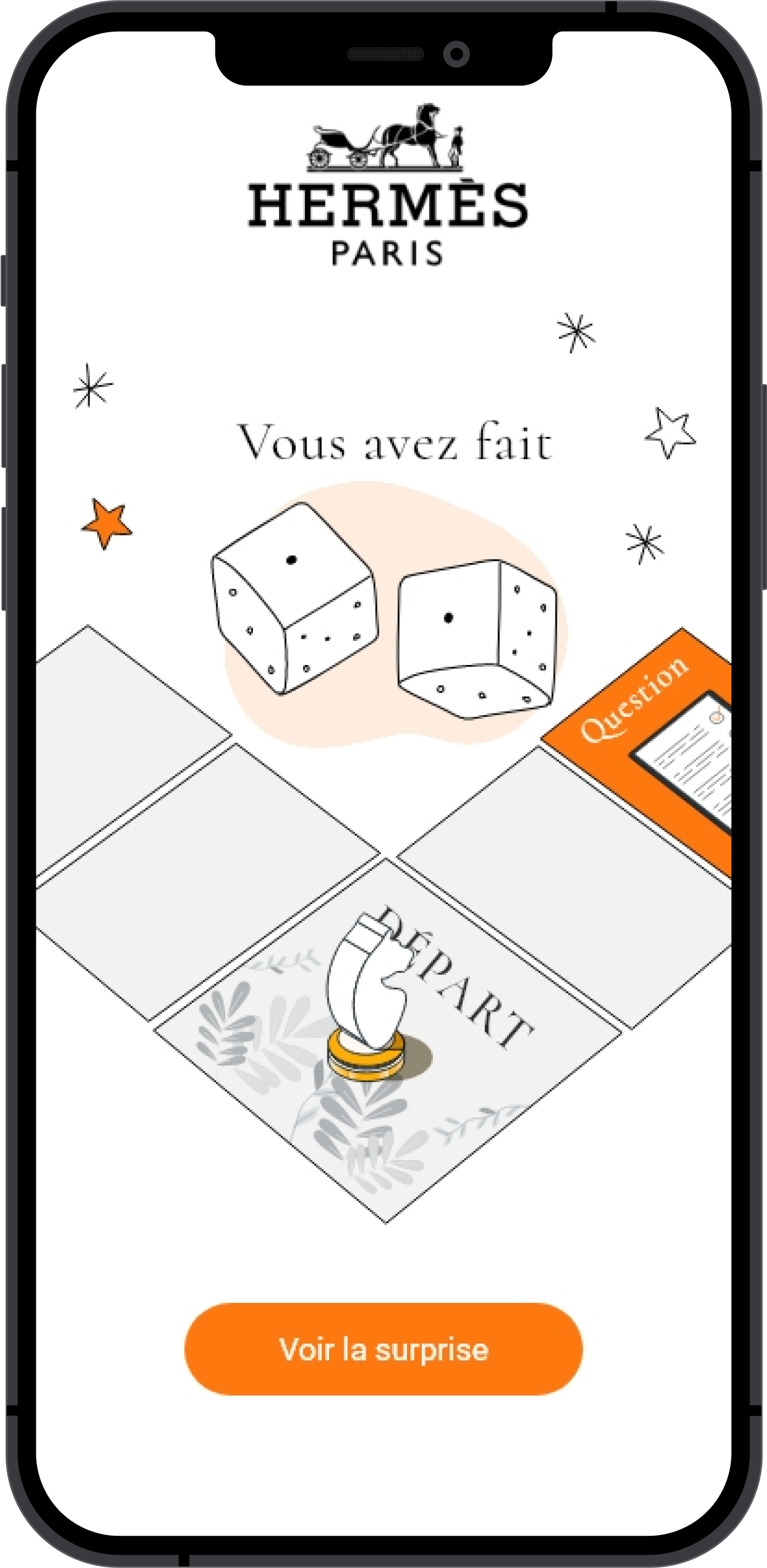
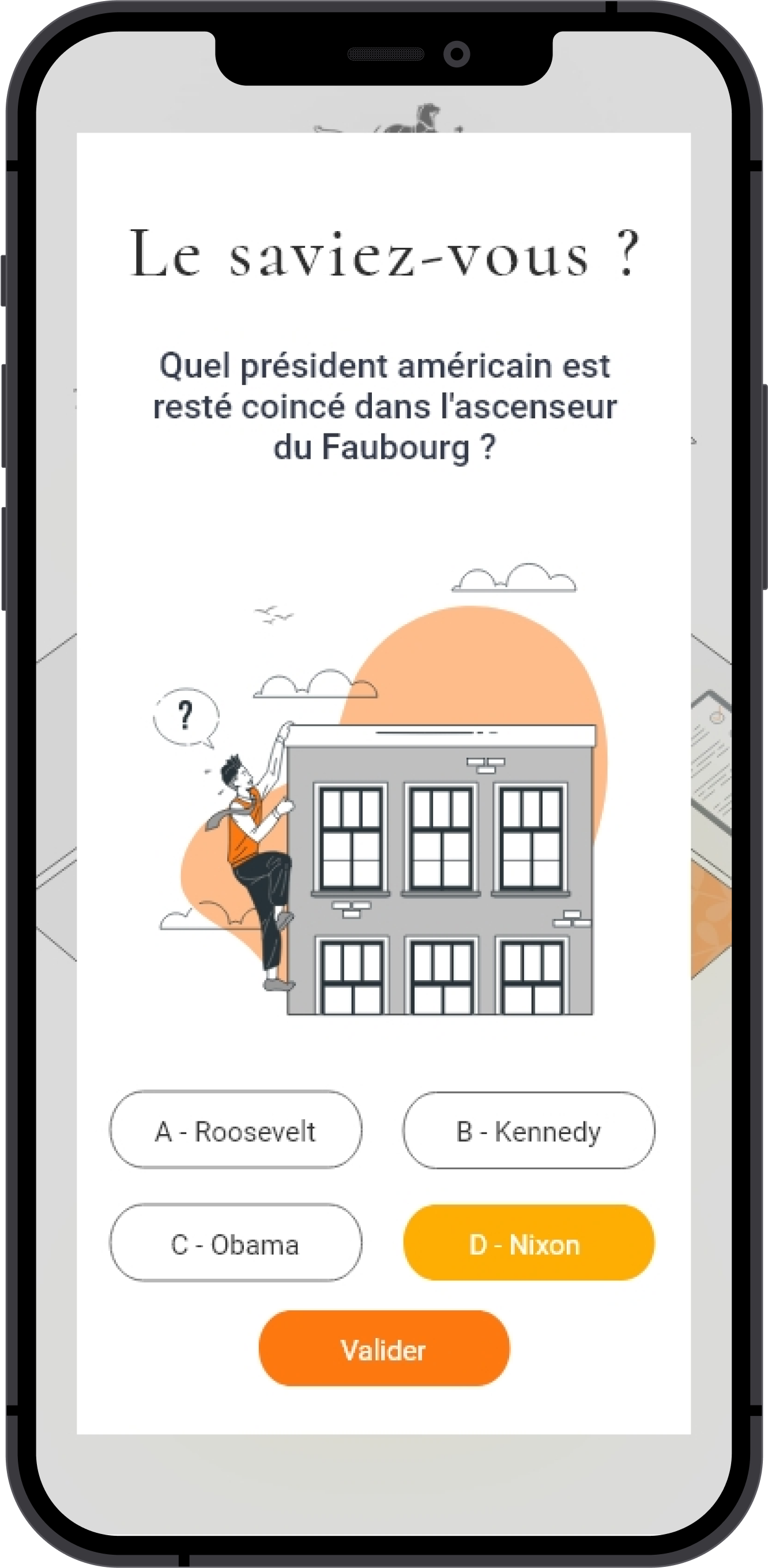
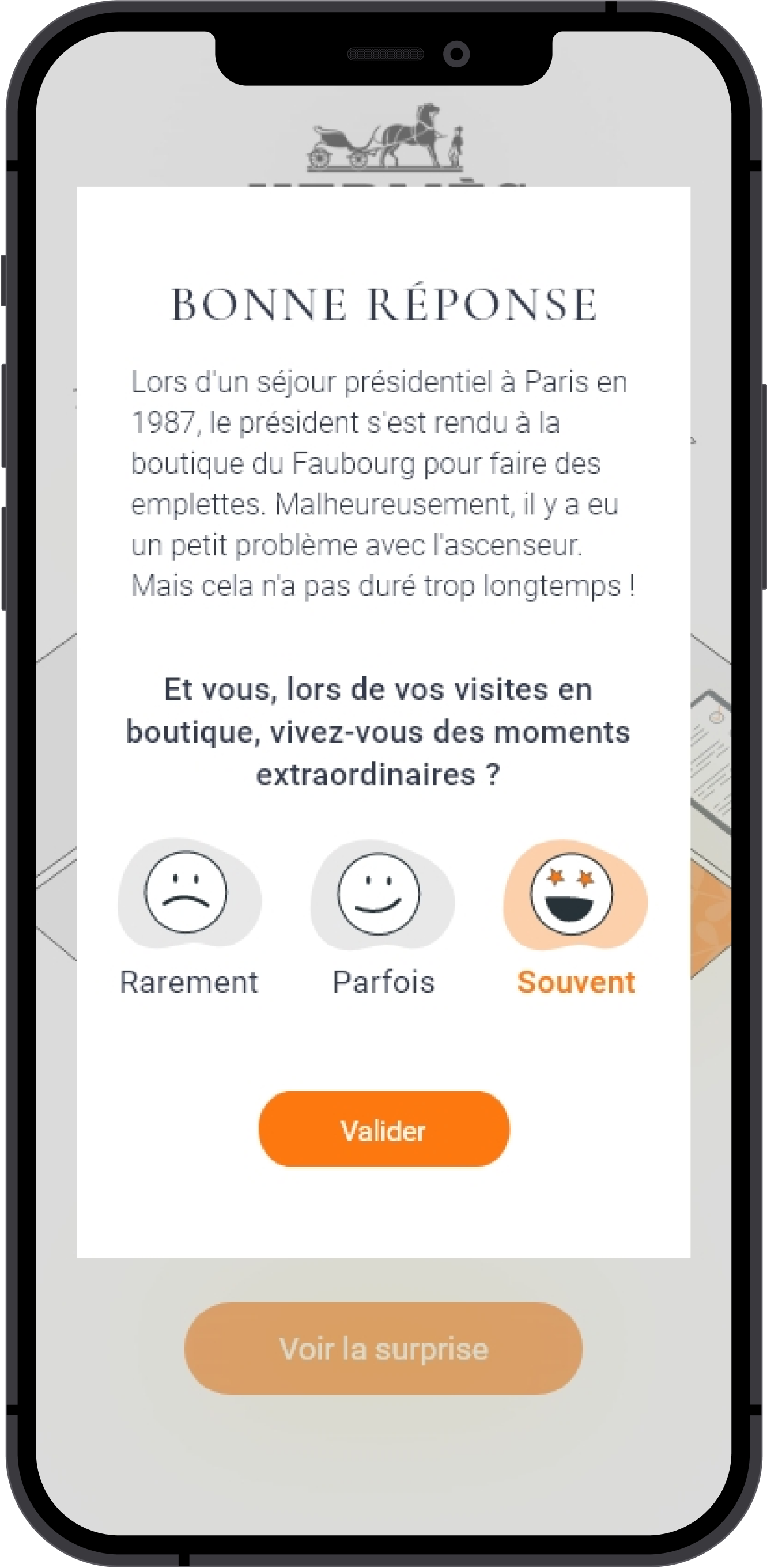
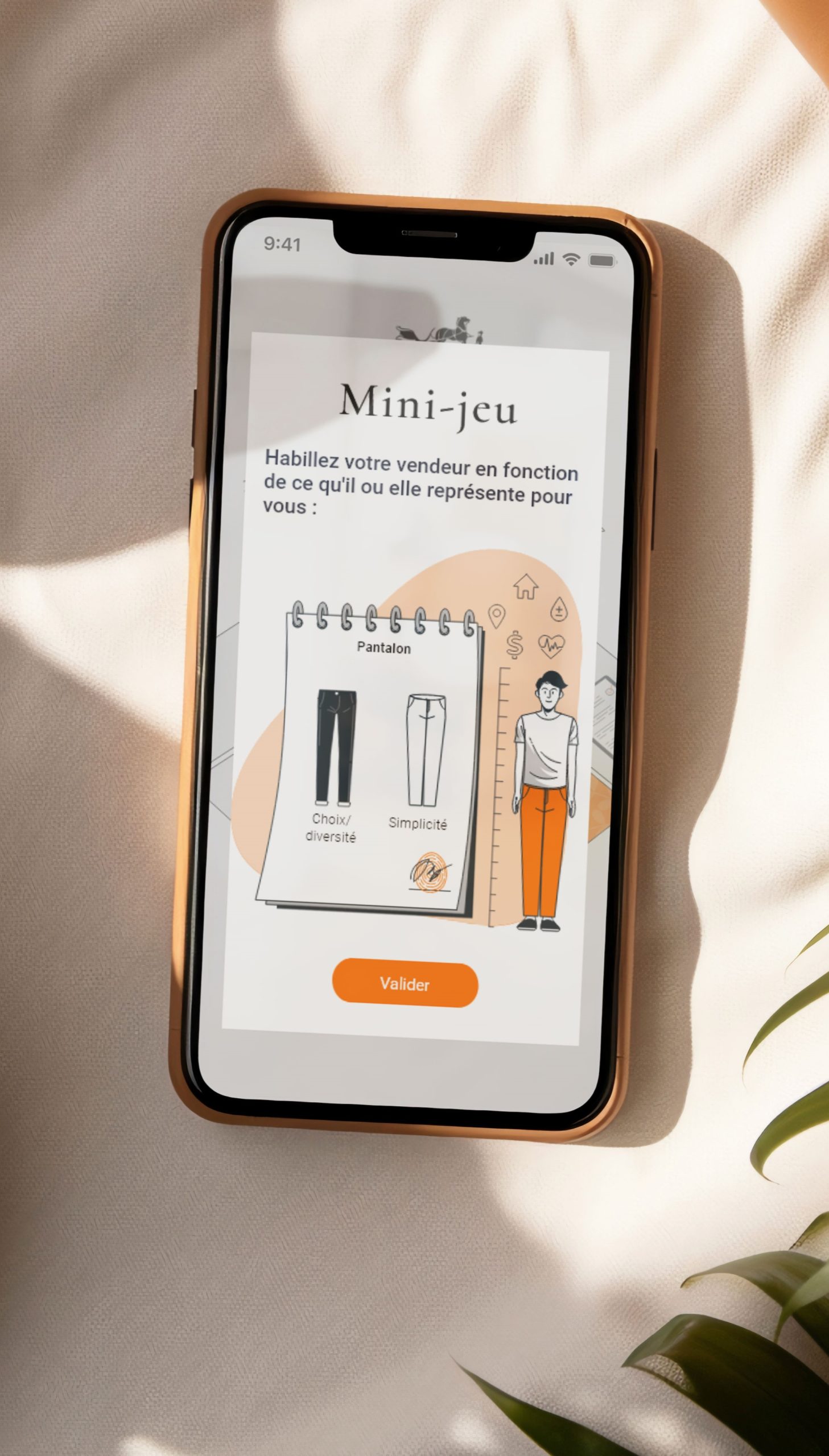
Once on the web page, the user is invited to start the adventure and roll the dice to advance. With each square the user crosses, they have the opportunity to come across a square that announces: Fun fact, Did you know or offer to play a mini-game. Each box reveals a card related to the world of Hermes, with anecdotes and humour, in order to keep the game fun and discoverable.
The questions, anecdotes and mini-games are linked to: history, know-how, art and exclusive content. In addition, once the activity is completed, the card is turned over to give the answer and ask the user a question that allows for customer feedback.
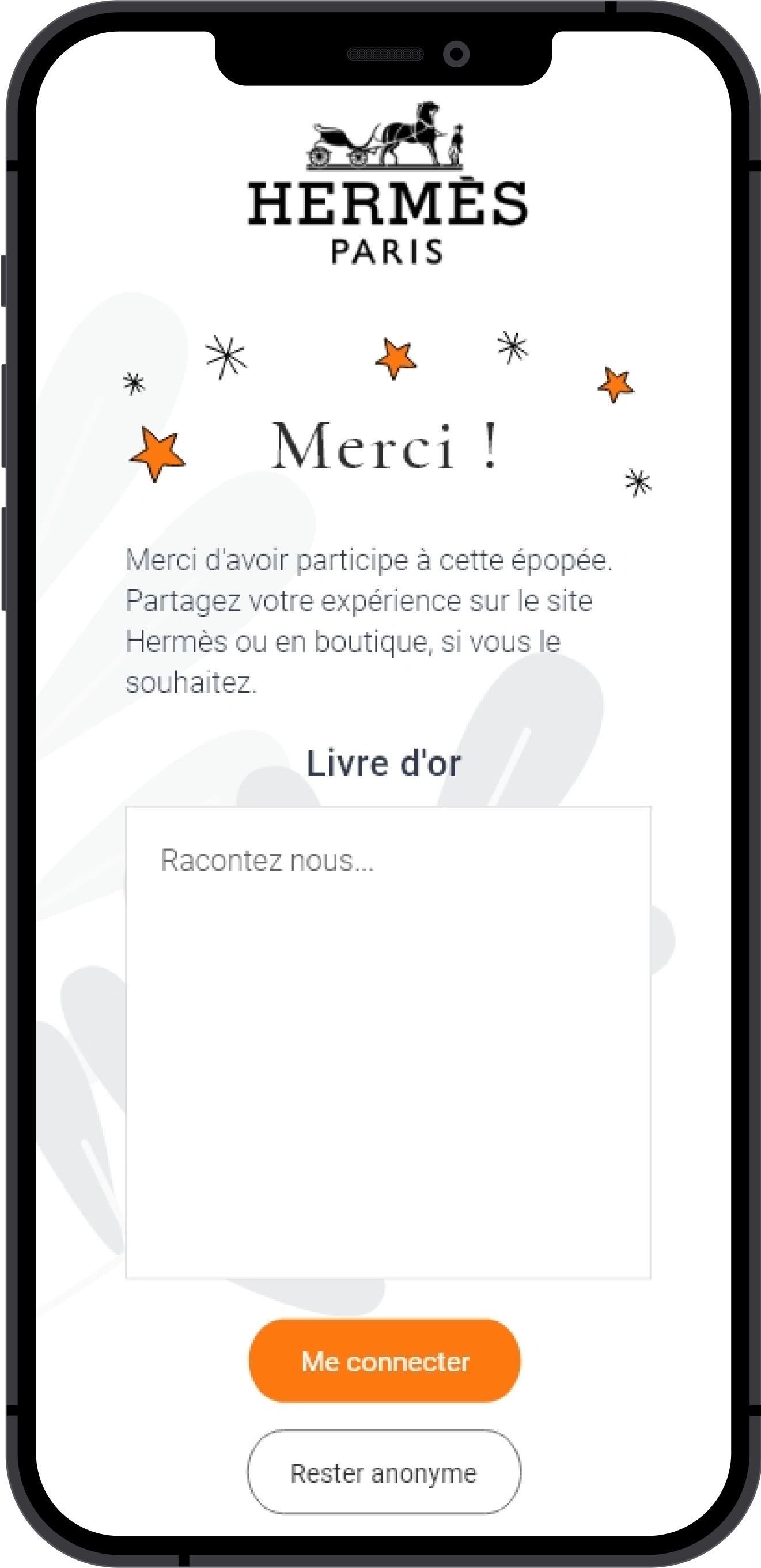
The game is estimated to take about 6 minutes to complete, or about 3 to 4 squares before reaching the end of the epic. The game ends with an invitation to leave your impressions (about Hermès) in a guestbook, before continuing on the site to discover the new collection.
Next project